
How Do Porta Potties Work?
The design is simple on purpose. A standard unit is about 44 by 48 inches on the ground and stands roughly 92 inches tall, so it fits in tight side yards and job corners without needing a permit conversation for placement alone. Under the seat sits the holding tank. When you use it, waste drops straight into the tank, where the blue liquid chemical starts breaking down solids and holding the smell down between services. There's a vent stack that lets gas escape above head height instead of building up inside the unit. No flush handle, no water line. That's the whole system, and it's why a construction worker running to a porta potty on a Davis jobsite loses about ninety seconds instead of walking to a break trailer across the lot. Servicing follows an industry pumping interval: ANSI/PSAI Z4.3 sets one visit per week as the baseline for up to 10 users over a 40 hour week, though busier sites need more frequent stops. If you're not sure how many units your crew needs, the how many porta potties do I need guide walks through the math, and OSHA 1926.51(c) sets the ratio at one toilet per 20 workers on a typical construction crew.
How Does a Flushable Porta Potty Work?
A deluxe flushable unit adds a small onboard freshwater tank and a hand pump or foot pedal that pushes a rinse of water through the bowl after each use, instead of just chemical breakdown in a static tank. The waste still goes into a holding tank underneath, just like a standard unit, but the bowl stays cleaner between service visits because there's an actual flush cycle. Some deluxe models also include a sink built into the unit. These run in deluxe flushable porta potty packages priced by the day or week, useful for weddings and higher-traffic events around Davis where guests notice the difference. Camping porta potties work the same basic way, sealed tank, chemical treatment, no plumbing hookup, which is why they show up at remote sites near Winters, 14.8 miles west, where there's no water or sewer access at all. For anyone comparing options before booking, the portable toilet rental page breaks down standard versus deluxe side by side.
How Does a Portable Sink Work?
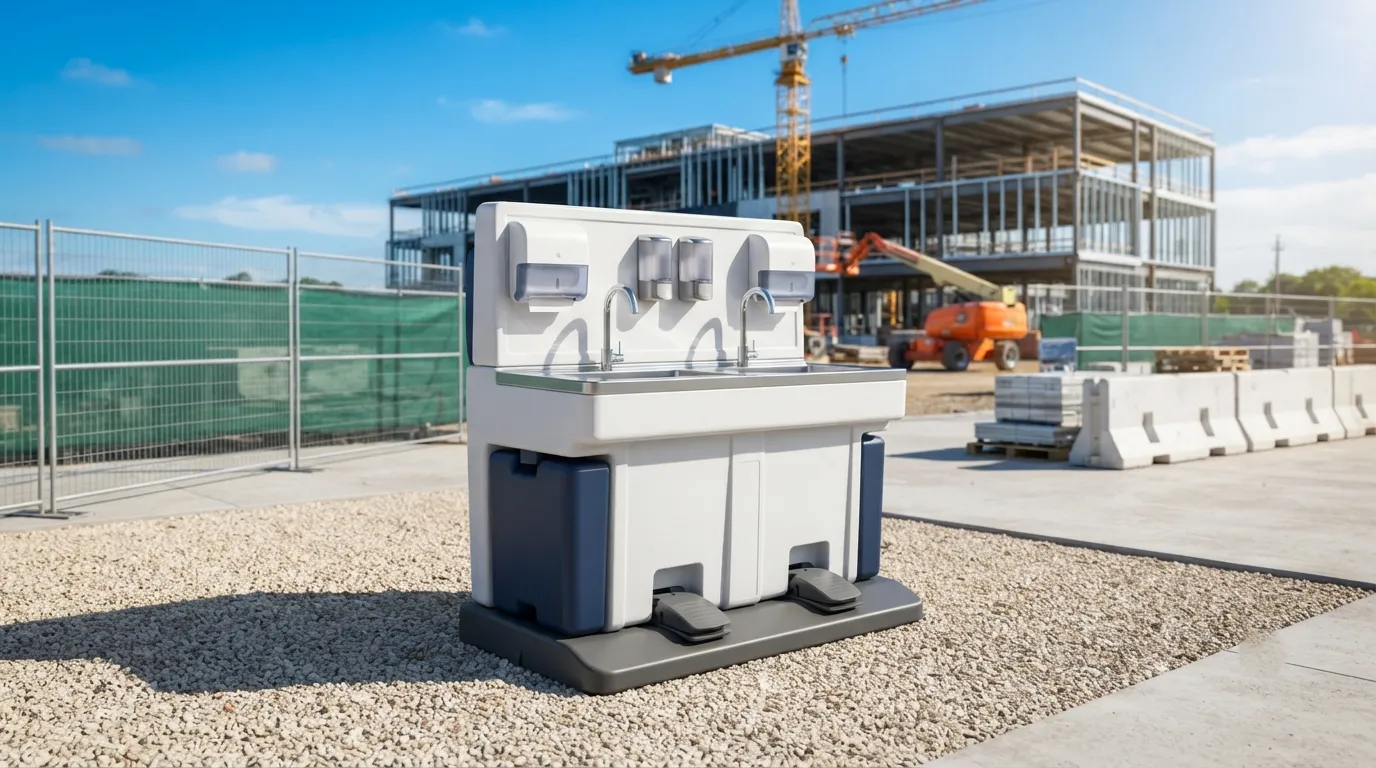
A portable sink runs on its own freshwater tank, usually with a foot pump or hand crank that pushes water through the tap, and a separate gray water tank underneath catches the runoff so nothing drains onto the ground. Soap and paper towels sit in a dispenser mounted to the unit. This matters for compliance: 29 CFR 1910.141(d)(2) requires washing facilities to have soap and towels or a hand drying device, and hand sanitizer alone doesn't satisfy that. On jobsites where crews are applying paints, coatings, herbicides or insecticides, OSHA 1926.51(f)(1) specifically requires washing facilities for that contaminant exposure, not just general handwashing. Farm labor sites have their own rule too: OSHA 1928.110 calls for one facility per 20 field workers, reachable within a quarter mile walk. Davis has agricultural operations close by, and a handwashing station rental or portable sink rental covers that requirement without running a water line out to a field. Some renters pair a sink with a hand sanitizer station rental as backup, though sanitizer doesn't replace the sink where OSHA applies.
What Chemicals Go in a Porta Potty?
The blue liquid in a portable toilet is a deodorizing and waste-breakdown chemical, not the same product used in a septic tank. Porta potty chemical is dosed for a sealed, non-plumbed tank and works fast against odor between weekly-or-tighter service visits. Septic tank cleaning chemicals are a different category entirely, meant to help bacterial breakdown inside a buried tank connected to a home's plumbing, and they don't belong in a portable unit. If you're searching "portable toilet chemicals near me" because you're trying to service a unit yourself, that's not typical for rental customers in Davis. Every standard portable toilet rental or portable restroom rental from Davis Porta Pros comes serviced on schedule, chemical included, so there's nothing to buy or refill on your end. For actual septic systems, a typical residential tank gets pumped every 3 to 5 years depending on tank size and household size, covered in more depth on septic tank cleaning and how often to pump a septic tank.
Do porta potties smell?
They can, especially in heat or with heavy use between services, but the chemical treatment and vent stack are designed to hold odor down between visits. Weekly service is the ANSI/PSAI Z4.3 baseline. See do porta potties smell for what actually drives odor and how to reduce it.
How often are porta potties cleaned?
Standard service is weekly under the ANSI/PSAI Z4.3 baseline, more often for high-traffic events or larger crews. Construction sites near UC Davis, 2.9 miles southwest, often bump to twice weekly. Full detail is on how often are porta potties cleaned.
Are porta potties ADA accessible?
Standard units aren't, but ADA units are built wider with grab bars and space for a wheelchair to turn. ADA Standards section 304.3.1 requires a 60 inch turning circle, and section 213.2 requires at least 5 percent of a cluster to be accessible. See ADA accessible porta potty.
Do porta potties need a permit in Davis?
Placement in the public right of way needs confirming with the city; that's not something to guess at. For anywhere else on private property, permitting is usually simpler. Check porta potty permit requirements before you finalize placement.
How much does a porta potty rental cost in Davis?
A standard unit runs in the range covered on porta potty rental cost, with day, week and month options depending on your job length. Deluxe and ADA units cost more; see porta potty rental per day for daily breakdowns.
Next step
Get a delivery date
Tell us the address, the dates and the headcount. We size the order and confirm the route.